More Quotes from Oregon


More on These Topics


Without courage, we cannot practice any other virtue with consistency. We can't be kind, true, merciful, generous, or honest.
Most obstacles melt away when we make up our minds to walk boldly through them.
Great is he, who conquers the frightful. Sublime is he, who, while succumbing to it, fears it not.
Cowards die many times before their deaths; the valiant never taste of death but once.
Any man can make mistakes, but only an idiot persists in his error.
Be brave. Take risks. Nothing can substitute experience.
The brave person thinks of themselves last of all.


Whenever you see a successful business, someone once made a courageous decision.

Freedom is what you do with what's been done to you.
The welfare of the people has always been the alibi of tyrants.
It was while helping others to be free that I gained my own freedom.
I could not understand how any man could be so brutalized as to claim the right to dispose of the lives of others, nor how any man could be so lacking in self-esteem as to grant to others the right to dispose of his life.
True success, true wealth, does not come out of the barrel of a gun.
They fear love because it creates a world they can't control.
Man is free at the moment he wishes to be.
All tyrannies rule through fraud and force, but once the fraud is exposed they must rely exclusively on force.
When you see that in order to produce, you need to obtain permission from men who produce nothing - When you see that money is flowing to those who deal, not in goods, butt in favors - When you see that men get richer by graft and by pull than by work, and your laws don’t protect you against them, but protect them against you - When you see corruption being rewarded and honesty becoming a self-sacrifice - You may know that your society is doomed.
Never cross a man, not afraid to die.
There comes a time when people get tired of being pushed out of the glittering sunlight of life’s July and left standing amid the piercing chill of an alpine November.
I have always regarded that Constitution as the most remarkable work known to me in modern times to have been produced by the human intellect, at a single stroke (so to speak), in its application to political affairs.
Men have called me mad; but the question is not yet settled, whether madness is or is not the loftiest intelligence.




Intelligent people tend to have less friends than the average person. The smarter you are, the more selective you become.
To criticize is to appreciate, to appropriate, to take intellectual possession, to establish in fine a relation with the criticized thing and to make it one's own.
The test of a first-rate intelligence is the ability to hold two opposed ideas in the mind at the same time, and still retain the ability to function.
I've always felt that a person's intelligence is directly reflected by the number of conflicting points of view he can entertain simultaneously on the same topic.
In walking, the will and the muscles are so accustomed to working together and performing their task with so little expenditure of force that the intellect is left comparatively free.
As I walked out the door toward the gate that would lead to my freedom, I knew if I didn’t leave my bitterness and hatred behind, I’d still be in prison.
I am the inferior of any man whose rights I trample underfoot. Men are no superior by reason of the accidents of race and color. The are superior who have the best heart—the best brain.
Democracy is two wolves and a lamb voting on what they are going to have for lunch. Liberty is a well-armed lamb contesting the vote.
Of all tyrannies, a tyranny sincerely exercised for the good of its victims may be the most impressive. It would be better to live under robber barons than under omnipotent moral busybodies. The robber baron's cruelty may sometimes sleep, his cupidity may at some point be saturated; but those who torment us for our own good will torment us without end for they do so with end for they do so with the approval of their own conscience.
The shepherd drives the wolf from the sheep’s throat, for which the sheep thanks the shepherd as his liberator, while the wolf denounces him for the same act. . . . Plainly the sheep and the wolf are not agreed upon the definition of liberty.
It was that which gave promise that in due time the weights would be lifted from the shoulders of all men, and that all should have an equal chance. This is the sentiment embodied in the Declaration of Independence. . . . I would rather be assassinated on this spot than surrender it.
If liberty and equality, as is thought by some, are chiefly two be found in democracy, they will be best attained when all persons alike share in the government to the utmost.
Never exceed your rights, and they will soon become unlimited.
Nonviolence is the answer to the crucial political and moral questions of our time; the need for man to overcome oppression and violence without resorting to oppression and violence.
A well governed appetite is the greater part of liberty.
Freedom of men under government is to have a standing rule to live by, common to every one of that society, and made by the legislative power vested in it; a liberty to follow my own will in all things when the rule prescribes not, and not to be subject to the inconstant, uncertain, unknown, arbitrary rule of another man.
Democracy and socialism have nothing in common but one word: equality. But notice the difference: while democracy seeks equality in liberty, socialism seeks equality in restraint and servitude.
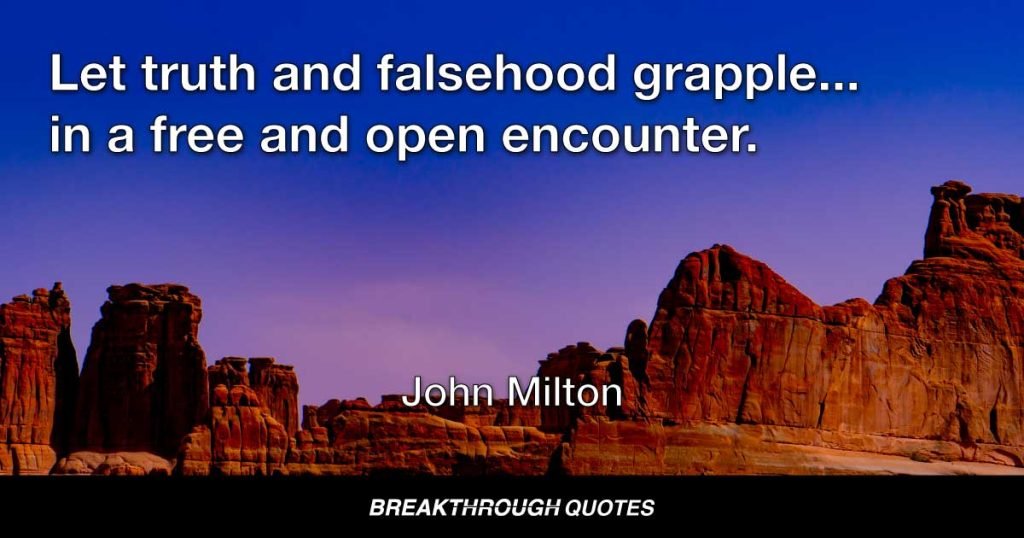
I think that we should be men first, and subjects afterward. It is not desirable to cultivate a respect for the law, so much as for the right.
The greatest dangers to liberty lurk in insidious encroachment by men of zeal, well-meaning but without understanding.
There is a class of colored people who make a business of keeping the troubles, the wrongs, and the hardships of the Negro race before the public. Having learned that they are able to make a living out of their troubles, they have grown into the settled habit of advertising their wrongs — partly because they want sympathy and partly because it pays. Some of these people do not want the Negro to lose his grievances, because they do not want to lose their jobs.