
More Quotes from Lao-tzu


More Quotes from Hawaii


More on These Topics
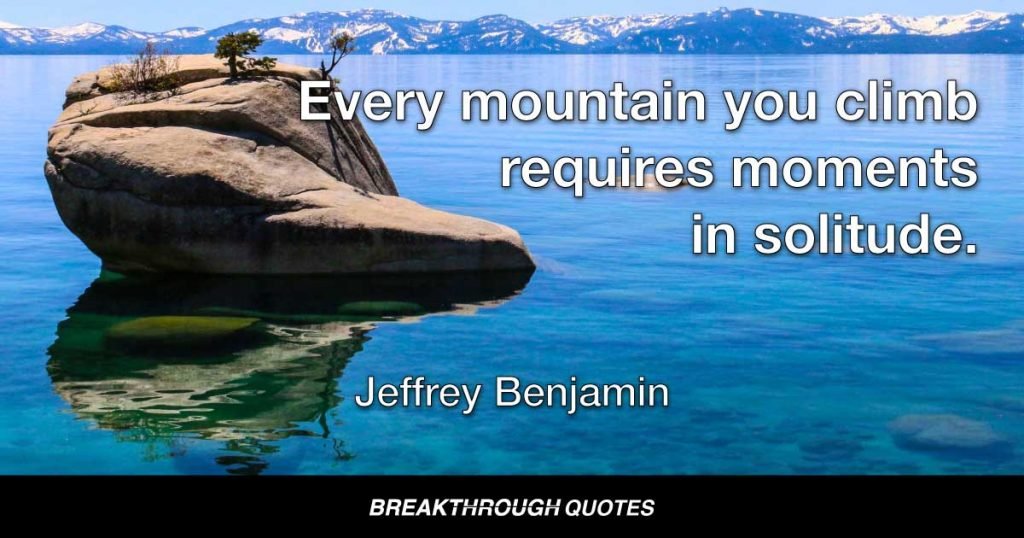

Most people are on the world, not in it—have no conscious sympathy or relationship to anything about them—undiffused, separate, and rigidly alone like marbles of polished stone, touching but separate.
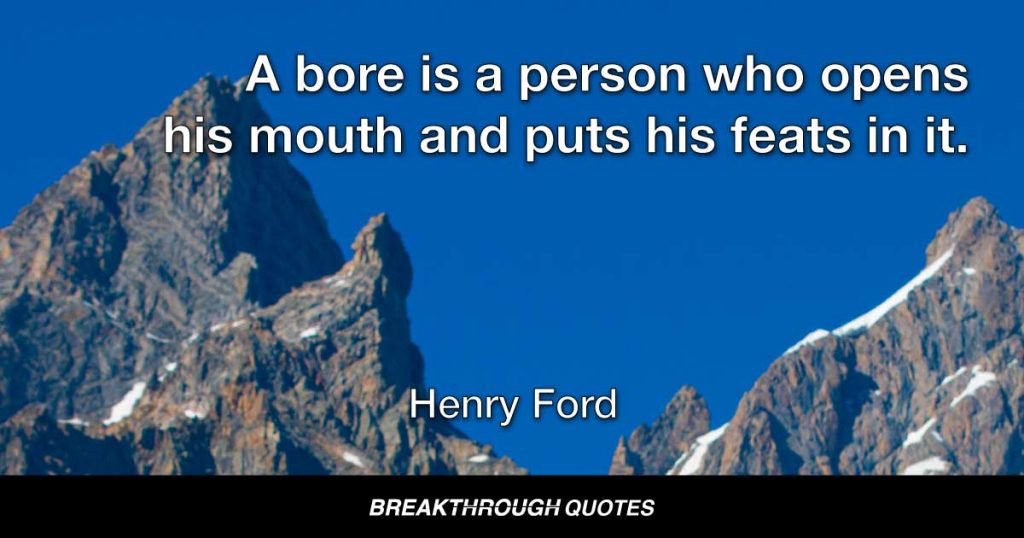
The shoe that fits one person pinches another; there is no recipe for living that suits all cases. Each of us carries his own life-form—an indeterminable form which cannot be superseded by any other.
Appearance rules the world.


As the traveler who has once been from home is wiser than he who has never left his own doorstep, so a knowledge of one other culture should sharpen our ability to scrutinize more steadily, to appreciate more lovingly, our own.
You write in order to change the world…the world changes according to the way people see it, and if you alter, even but a millimetre the way people look at reality, then you change it.
Ignorance never settle a question.
You must try to observe yourself more and more objectively, to look at everything in yourself as though another person.
A problem well-put is half-solved.
There is not one big cosmic meaning for all, there is only the meaning we each give to our life. . . To seek a total unity is wrong. To give as much meaning to one’s life as possible is right to me.
The things which . . . are esteemed as the greatest good of all . . . can be reduced to these three headings: to wit, Riches, Fame, and Pleasure. With these three the mind is so engrossed that it cannot scarcely think of any other good.
The chief danger in life is that you may take too many precautions.

Anyone can make money. Making a life worth living, now that's the real test.
There are a thousand excuses for failure but never a good reason.


While there's life, there's hope.
The universe is wider than our views of it.

Men are disturbed not by things, but by the view which they take of them.

Every man has his secret sorrows which the world knows not; and oftentimes we call a man cold, when he is only sad.

To raise new questions, new possibilities, to regard old problems from a new angle, requires creative imagination and marks real advance in science.
Man can learn nothing unless he proceeds from the known to the unknown.
Appearances to the mind are of four kinds. Things either are what they appear to be; or they neither are, nor appear to be; or they are, and do not appear to be; or they are not, and yet appear to be. Rightly to aim in all these cases is the wise man’s task.

It is of particular value to learn to like yourself. Since you must spend so much time with yourself you might as well get some satisfaction out of the relationship.
Before a man can accomplish anything of an enduring nature in the world, he must first of all acquire some measure of success in the management of his own mind.
Satire is a sort of glass, wherein beholders do generally discover everybody's face but their own.
And God said love your enemy and I obeyed him and loved myself.

If everyone was satisfied with himself, there would be no heroes.


The true worth is not to be found in man himself, but in the colors and texture that come alive in others.

A great man is hard on himself; a small man is hard on others.


We should be careful to get out of an experience only the wisdom that is in it—and stop there; lest we be like the cat that sits down on a hot stove lid. She will never sit down on a hot stove lid again—and that is well; but also she will never sit down on a cold one any more.

All things are filled full of signs, and it is a wise man who can learn about one thing from another.



The wise man does at once what the fool does finally.
A wise man proportions his belief to the evidence.
Great wisdom is generous, petty wisdom is contentious. Great speech is impassioned, small speech in cantankerous.
The man who is truly good and wise will bear with dignity whatever fortune sends, and will always make the best of his circumstances.